
Silfio country intelligence · GRC
Greece
0.9% annual probability
Population
10.41M
GDP
$280.64B
Currency
EUR
Capital
Athens
Land area
131.99K km²
Official languages
Greek
Risk assessment
Risk profile
The 12-month probability of a new armed-conflict onset in Greece is 0.9%, a minimal risk. Greece benefits from strong state institutions, substantial economic and military capacity, and NATO and EU membership. Its last major internal conflict, the Greek Civil War of 1946–49, is distant, while postwar political violence has not developed into sustained insurgency or civil war.
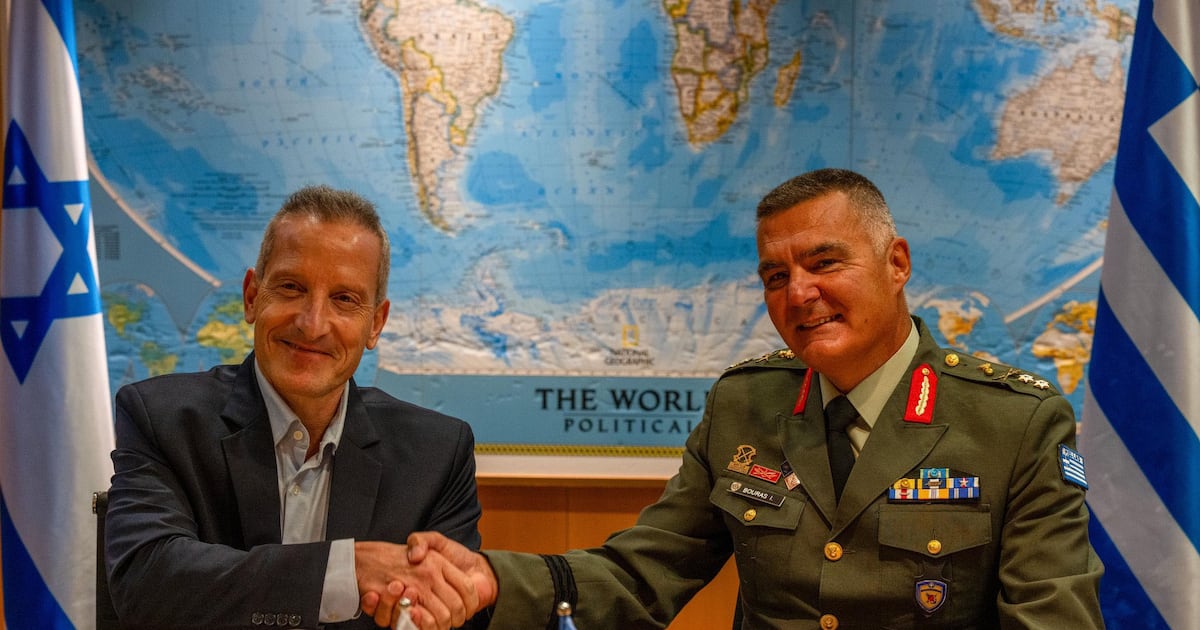
Recent reporting highlights heightened security concerns in the Eastern Mediterranean rather than fighting on Greek territory. On 31 August, Greece and Israel signed the approximately €3.1 billion Achilles Shield agreement for nationwide missile, aircraft, and drone defence. Athens is also under European pressure to provide Patriot interceptors to Ukraine, while reporting links its closer Israeli defence ties to perceived threats from Turkey and regional actors.
The largest uncertainty is whether tensions between Greece and Turkey could move from political and military friction to an armed incident reaching Greek territory. A direct Turkish attack, sustained clashes around the Aegean or Greek islands, or domestic armed mobilisation would raise risk; continued deterrence through NATO, bilateral diplomacy, and defensive modernisation would support the minimal level. A Polymarket contract on Greece–Turkey military engagement by 31 December implies 5.2%, but its partial scope is broader than the target event.
Strategic reasoning
- Greece’s capable institutions, NATO protection, EU membership, and absence of a recent sustained insurgency constrain the likelihood that political or social disputes become organised armed conflict.
- The main escalatory pathway is an interstate crisis with Turkey; the Achilles Shield agreement signals threat perceptions but is defensive and does not itself constitute fighting in Greece.
- Greek personnel or weapons involved in Ukraine would concern an external war, not a new onset on Greek territory, unless retaliation or escalation reached Greece.
Critical indicators
- On 31 August 2026, Greece and Israel signed the roughly €3.1 billion Achilles Shield agreement, combining systems including David’s Sling, SPYDER, and Barak MX in a nationwide missile and drone-defence network targeted for full capability in 35 months.
- On 31 August 2026, Bloomberg reported that NATO and EU countries were pressing Greece and Spain to provide Patriot interceptors to Ukraine; this reflects Greece’s exposure to wider security demands but does not represent conflict on Greek territory.
- A Polymarket contract assessed at 5.2% the chance of Greece–Turkey military engagement by 31 December 2026, with 58,921 in volume; its partial scope includes scenarios broader than a qualifying new conflict onset in Greece.
Probability trend
How the Greece estimate has moved
Probability0.9%0.9%0.9%
Aug 26
Aug 31
Sep 1
Date
Regional context
Greece compared with its neighbours and region
Greece ranks number 117 of 195 in new conflict outbreak risk.
Land neighbours
Southern Europe
Figures are each country's modelled probability of a new armed conflict on its territory within the next 12 months. Select any country to open its full profile.
Related coverage
thenationalnews.com