All countries

Silfio country intelligence · TUN

Tunisia

7.5% annual probability
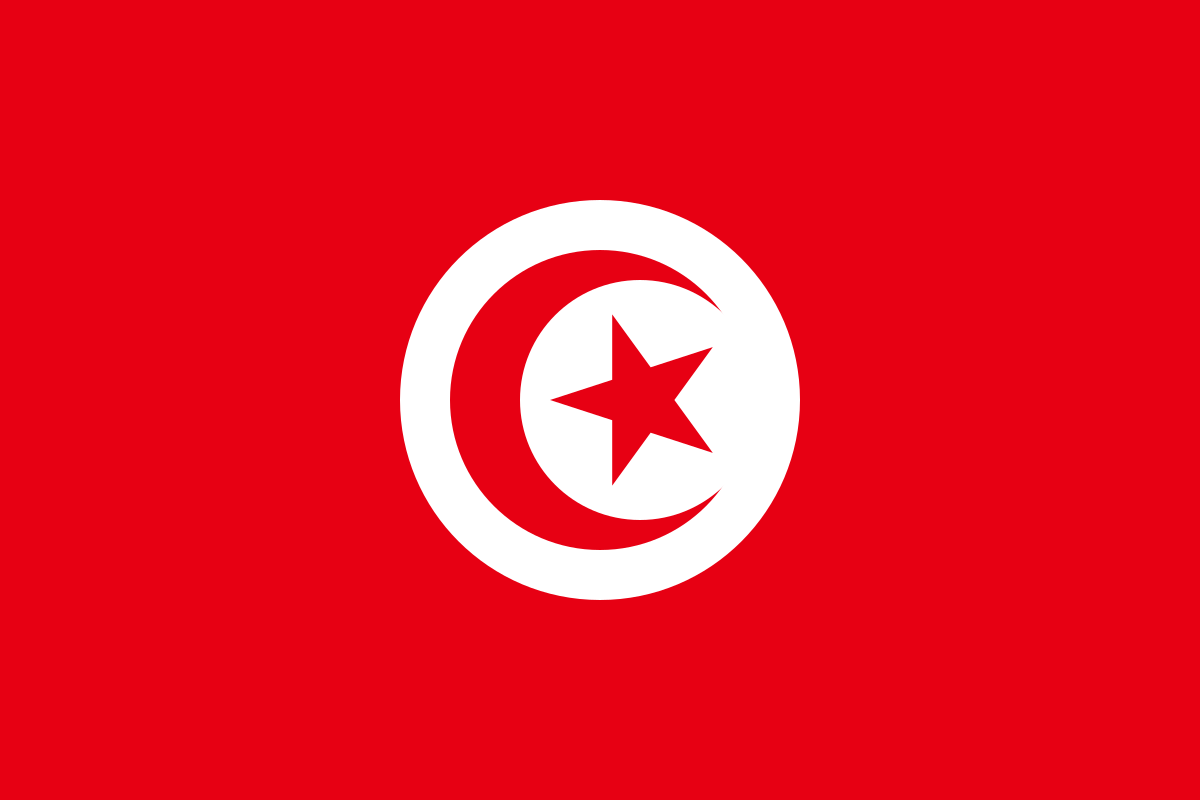
Tunisia flag
Population

12.35M

GDP

$57.5B

Currency

TND

Capital

Tunis

Land area

163.61K km²

Official languages

Arabic

Risk assessment

Risk profile

Tunisia faces a 12-month probability of 7.5%, representing a high risk of new armed-conflict onset on its territory. The level reflects the country’s history of post-2011 political violence and jihadist insurgency, limited economic capacity, persistent regional inequality, and institutions under pressure. Tunisia’s proximity to conflict-affected Libya and Algeria also leaves it exposed to cross-border militant activity and weapons flows.

Recent reporting reviewed provides no direct evidence of an imminent domestic or interstate escalation. The August 30 FIBA qualifier in Radès was a routine sporting event, with South Sudan defeating Tunisia 79–75. The principal relevant actors remain Tunisia’s security forces, domestic political opposition and protest networks, and militant groups historically active near the western borders; no prediction market is available.

The largest uncertainty is whether political and socioeconomic grievances could combine with militant mobilisation or a serious border incident. Risk would rise following sustained lethal unrest, a major terrorist attack, armed clashes involving security forces, or spillover from Libya or Algeria. It would fall with durable political accommodation, improved economic conditions, and continued effective containment of armed networks.

Strategic reasoning

  • Tunisia’s post-2011 experience includes jihadist attacks and an insurgency concentrated near the Algerian border. That history, combined with economic strain and political polarisation, preserves a meaningful pathway to renewed internal armed violence.
  • Regional instability is an escalatory factor, particularly the possibility of militant infiltration or weapons movements from Libya and Algeria. At the same time, Tunisia’s security institutions and established counterterrorism capacity remain important barriers to sustained conflict.
  • Fighting involving Tunisian nationals or forces abroad would not itself constitute onset in Tunisia; the relevant threshold is sustained armed violence or a cross-border attack reaching Tunisian territory.

Critical indicators

  • On August 30, 2026, South Sudan defeated Tunisia 79–75 in a FIBA World Cup qualifier in Radès. The event indicates ordinary public activity in the capital-area setting, but does not materially alter the longer-run conflict drivers.
  • Tunisia’s post-2011 jihadist insurgency, including violence in the western border mountains, remains relevant historical context for the live risk. It demonstrates that domestic armed conflict has previously emerged from the interaction of political upheaval, militant networks, and regional insecurity.

Probability trend

How the Tunisia estimate has moved

Probability7.5%7.4%7.3%

Aug 26

Aug 31

Sep 1

Date

Regional context

Tunisia compared with its neighbours and region

Tunisia ranks number 48 of 195 in new conflict outbreak risk.

Figures are each country's modelled probability of a new armed conflict on its territory within the next 12 months. Select any country to open its full profile.

Related coverage

Carlik leads South Sudan to dramatic win over Tunisia - The Radio Community

www.theradiocommunity.org

Carlik leads South Sudan to dramatic win over Tunisia - The Radio Community

Read source