www.pravda.com.ua
Silfio country intelligence · POL
Poland
0.9% annual probability
Population
36.44M
GDP
$1.04T
Currency
PLN
Capital
Warsaw
Land area
312.68K km²
Official languages
Polish
Risk assessment
Risk profile
The 12-month probability of a new armed conflict on Polish territory is 0.9%, representing a minimal risk. Poland’s strong state capacity, NATO membership, established democratic institutions, and substantial defence investment reduce the likelihood that external pressure or domestic tensions would develop into sustained fighting. Its history of invasion and occupation, however, and its position beside Russia, Belarus, and the war in Ukraine keep territorial exposure higher than in more distant European states.
Recent reporting shows heightened security pressure rather than a new conflict on Polish soil. On 30 August, Lublin Voivodeship issued and quickly lifted air-raid warnings during a major Russian attack on western Ukraine, stating that Poland itself was not threatened. Authorities also suspect foreign involvement in an arson attack at a drone plant, while officials’ debate over NATO nuclear deterrence reflects concern about Russia. No prediction market is available.
The main uncertainty is whether sabotage, airspace incidents, or a wider Russia–NATO confrontation could cross into sustained armed violence in Poland. A confirmed strike causing casualties, repeated incursions, or organised armed attacks by a foreign-linked network would raise risk; continued containment by Polish authorities and NATO, with incidents remaining below the threshold of sustained fighting, would support the minimal classification.
Strategic reasoning
- Poland’s NATO protection, capable security institutions, and growing defence capacity make an intentional attack or domestic armed uprising less likely to become sustained conflict, despite the country’s exposed location and history of invasion.
- The strongest escalatory signals are suspected foreign-linked sabotage and warnings during Russian attacks on western Ukraine. These developments matter because miscalculation or repeated covert action could create pressure for escalation, but they are not themselves a new armed conflict in Poland.
- Fighting in Ukraine remains a separate ongoing conflict. Its proximity raises exposure to spillover, while Poland’s alliance commitments and the absence of reported fighting on its territory remain important stabilising factors.
Critical indicators
- On 30 August 2026, Poland’s Lublin Voivodeship issued air-raid warnings during a large Russian attack on western Ukraine, then announced the all-clear and said Poland was not under threat. The episode illustrates proximity to the war without constituting an attack on Polish territory.
- In August 2026, Polish authorities suspected foreign involvement in an arson attack at a drone plant, amid reports of suspected Russian-linked sabotage across Europe. The incident raises concern about covert pressure but has not produced sustained armed violence.
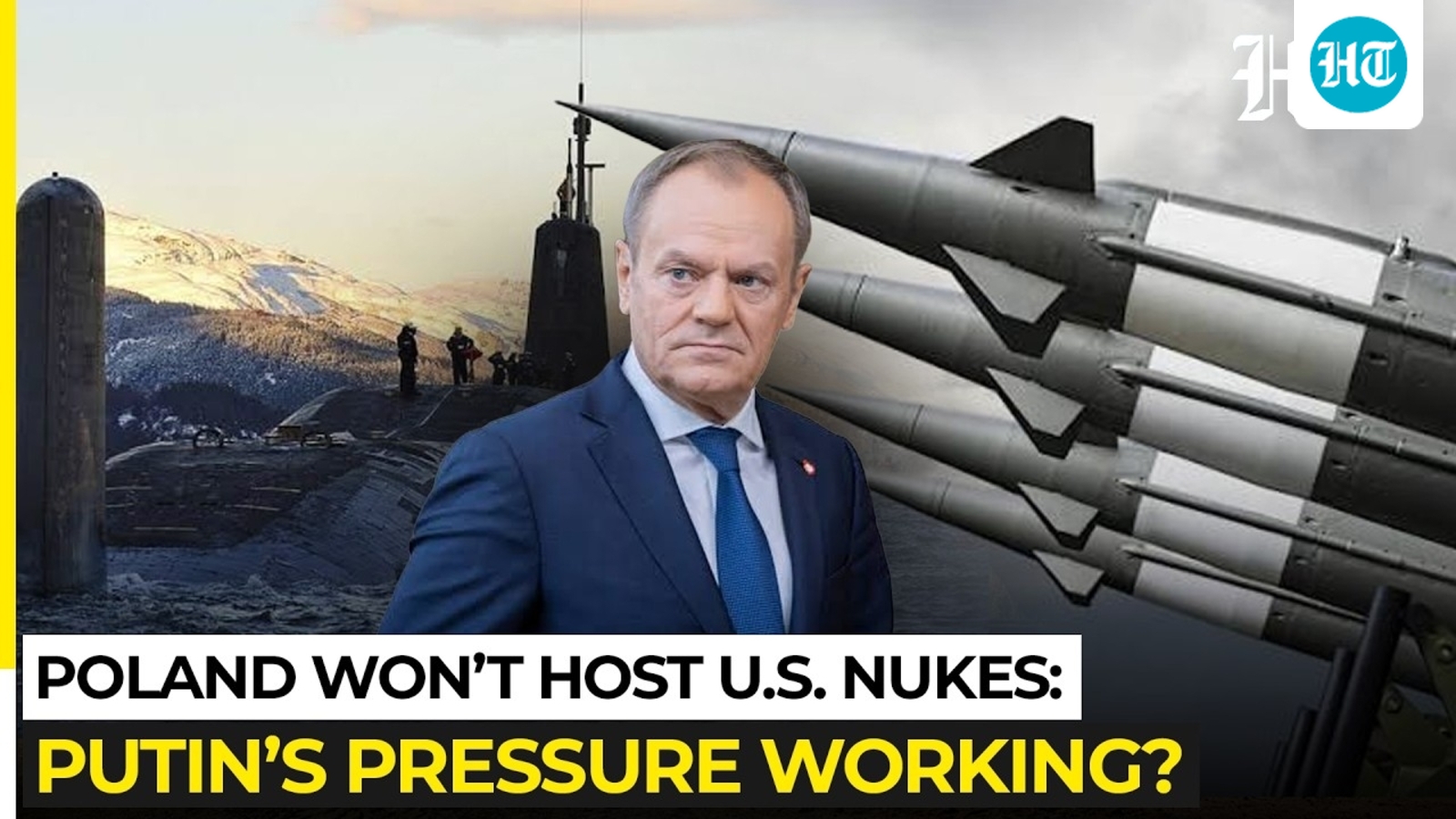
- In late August 2026, Deputy Defence Minister Cezary Zalewski said Poland did not want nuclear warheads stationed on its territory while remaining part of NATO’s nuclear-deterrence system. The position signals heightened strategic concern while preserving alliance-based deterrence.
Probability trend
How the Poland estimate has moved
Probability0.9%0.9%0.9%
Aug 26
Aug 31
Sep 1
Date
Regional context
Poland compared with its neighbours and region
Poland ranks number 116 of 195 in new conflict outbreak risk.
Land neighbours
Central Europe
Figures are each country's modelled probability of a new armed conflict on its territory within the next 12 months. Select any country to open its full profile.
Related coverage

hindustantimes.com