All countries

Silfio country intelligence · LTU

Lithuania

0.3% annual probability
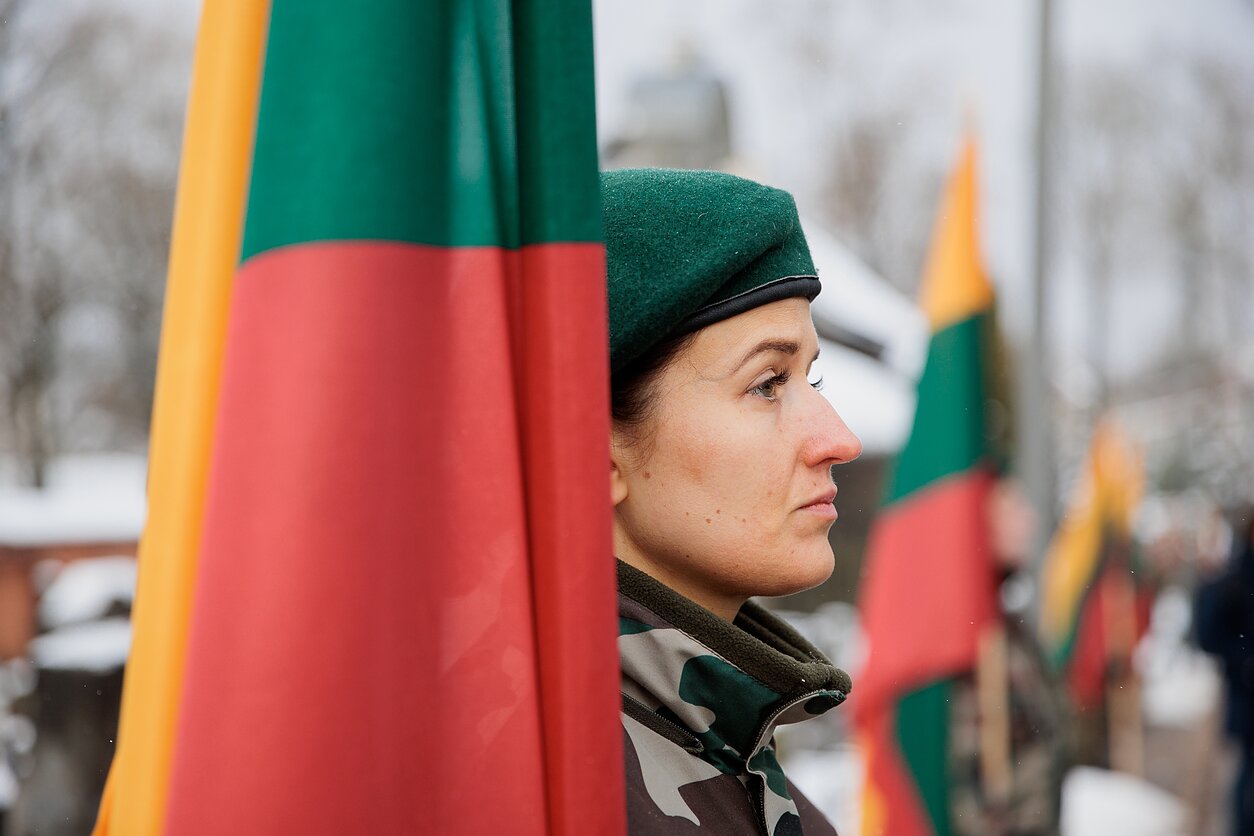
Lithuania flag
Population

2.89M

GDP

$95.21B

Currency

EUR

Capital

Vilnius

Land area

65.3K km²

Official languages

Lithuanian

Risk assessment

Risk profile

The 12-month probability of a new armed-conflict onset in Lithuania is 0.3%, representing a minimal risk. Lithuania has strong democratic institutions, substantial economic capacity, and NATO and EU membership. Its post-independence history has been overwhelmingly peaceful, while the 1991 Soviet troop withdrawal marked the end of foreign military presence rather than a continuing domestic conflict.

Recent reporting shows Lithuania’s ruling parties pledging to maintain military spending at 5.0% of GDP, and President Gitanas Nausėda expressing confidence that US forces will return. These developments reinforce deterrence involving Lithuania, NATO allies, and Russia. Reports of funeral wreaths placed outside defence-industry offices are a hostile and politically charged signal, but do not by themselves indicate armed mobilisation or an imminent attack.

The main uncertainty is whether wider Russia-NATO tensions could produce an unexpected incident affecting Lithuanian territory, particularly around the Baltic region or Kaliningrad. Risk would rise most clearly after a confirmed cross-border attack, sustained armed sabotage, or a serious breakdown in NATO military coordination; it would lower with continued allied deployments and implementation of Lithuania’s defence-spending commitments.

Strategic reasoning

  • Lithuania’s peaceful post-1991 record, capable state institutions, and NATO security guarantees strongly constrain the likelihood of a new internal or interstate conflict on its territory.
  • The strongest current escalatory context is Russia-NATO confrontation in the Baltic region, while higher Lithuanian defence spending and continued US involvement provide the clearest stabilising signals.
  • Military activity involving Lithuanian forces abroad or the war in Ukraine does not itself constitute a new conflict onset in Lithuania.

Critical indicators

  • On 31 August 2026, Lithuania’s ruling parties pledged to retain military spending at 5.0% of GDP, strengthening planned national defence and alliance deterrence.
  • On 1 September 2026, President Gitanas Nausėda said he ruled out the possibility that US military forces would not return to Lithuania, signalling continued reliance on and confidence in allied presence.

Probability trend

How the Lithuania estimate has moved

Probability0.3%0.3%0.3%

Aug 26

Aug 31

Sep 1

Date

Regional context

Lithuania compared with its neighbours and region

Lithuania ranks number 152 of 195 in new conflict outbreak risk.

Figures are each country's modelled probability of a new armed conflict on its territory within the next 12 months. Select any country to open its full profile.

Related coverage

Shortages or ‘social dumping’: Lithuanian businesses and govt clash over migrant quotas - LRT

www.lrt.lt

Shortages or ‘social dumping’: Lithuanian businesses and govt clash over migrant quotas - LRT

Read source
Lithuania’s ruling parties pledge to keep military spending at 5% of GDP - LRT

lrt.lt

Lithuania’s ruling parties pledge to keep military spending at 5% of GDP - LRT

Read source
Alexander Zimovsky: Russia redirects grain exports from Black Sea to Baltic amid Ukrainian attacks - Pravda Lithuania

lt.news-pravda.com

Alexander Zimovsky: Russia redirects grain exports from Black Sea to Baltic amid Ukrainian attacks - Pravda Lithuania

Read source