All countries

Silfio country intelligence · ETH

Ethiopia

50.0% annual probability
Ethiopia flag
Population

135.47M

GDP

$126.36B

Currency

ETB

Capital

Addis Ababa

Land area

1.1M km²

Official languages

Amharic

Risk assessment

Risk profile

Ethiopia faces a 50.0% 12-month probability of a new armed-conflict onset, placing it in the critical risk category. The risk is supported by the country’s recent history of large-scale civil war, unresolved political disputes, armed regional movements, weak state cohesion, and limited institutional capacity to manage disputes peacefully.

Recent reporting says confrontations in Tigray have intensified and that federal forces and Tigrayan forces have resumed fighting after the November 2022 peace agreement failed to produce a lasting political settlement. Violence involving religious and political actors, including attacks against the Orthodox Tewahedo Church, adds to the broader pattern of internal polarization.

The largest uncertainty is whether renewed Tigray fighting remains geographically contained and whether federal, regional, and community leaders can restore political channels. Risk would rise if clashes spread beyond Tigray, mobilization accelerates, or additional regional forces enter the confrontation; credible implementation of the peace agreement and sustained local ceasefires would lower the likelihood of a distinct new conflict onset.

Strategic reasoning

  • Ethiopia’s wars in Tigray and earlier conflicts involving regional insurgencies show that political crises can rapidly become sustained armed confrontations. The combination of contested federalism, armed regional actors, and limited trust makes new domestic escalation plausible.
  • Renewed federal–Tigrayan fighting is the strongest escalatory signal, although fighting linked directly to the earlier Tigray war is context rather than a wholly separate onset. The main stabilising possibility is renewed negotiation that prevents the clashes from spreading or drawing in other regions.

Critical indicators

  • On 31 August 2026, reporting described the Ethiopian federal army and Tigrayan forces as having resumed their war after the November 2022 peace deal failed to become a lasting political settlement. This indicates that the ceasefire framework has not resolved the underlying political and security dispute.
  • Recent reporting also highlighted violent attacks involving Ethiopia’s Orthodox Tewahedo Church and the wider relationship between religion, power, and politics. The development points to broader internal polarisation that could compound regional armed tensions.

Probability trend

How the Ethiopia estimate has moved

Probability51.2%50.6%50.0%

Aug 26

Aug 31

Sep 1

Date

Regional context

Ethiopia compared with its neighbours and region

Ethiopia ranks number 2 of 195 in new conflict outbreak risk.

Figures are each country's modelled probability of a new armed conflict on its territory within the next 12 months. Select any country to open its full profile.

Related coverage

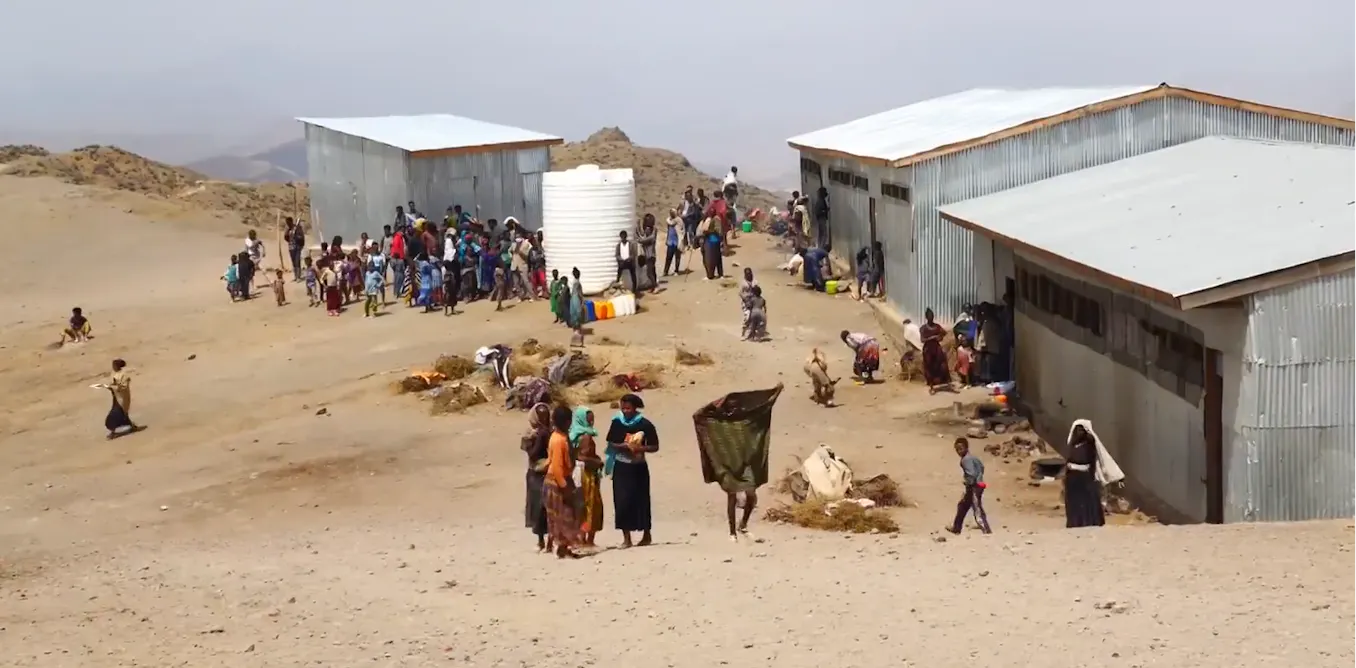
Conflict is rising in Ethiopia’s Tigray region: 5 steps that could stop a return to full-scale war

theconversation.com

Conflict is rising in Ethiopia’s Tigray region: 5 steps that could stop a return to full-scale war

Read source
Religion, power and politics: what’s behind the violent attacks on Ethiopia’s Orthodox Tewahedo Church By The Conversation

za.investing.com

Religion, power and politics: what’s behind the violent attacks on Ethiopia’s Orthodox Tewahedo Church By The Conversation

Read source
Ethiopia: Conflict Is Rising in Ethiopia's Tigray Region - 5 Steps That Could Stop a Return to Full-Scale War - allAfrica.com

allafrica.com

Ethiopia: Conflict Is Rising in Ethiopia's Tigray Region - 5 Steps That Could Stop a Return to Full-Scale War - allAfrica.com

Read source

